
AIA invites firms to participate in Disaster Risk Reduction and Resilience Pledge
The pledge encourages firms to work with clients, consultants, stakeholders and communities to consider current and future risks, helping clients establish priorities and identify investments that can meaningfully enhance project and community resilience.

WASHINGTON – September 23, 2026 – The American Institute of Architects (AIA) is inviting architects to participate in the new AIA Disaster Risk Reduction and Resilience Pledge, a commitment framework that integrates resilience and disaster risk reduction into the design and planning process, helping communities better withstand extreme weather, reduce vulnerabilities and break the costly cycle of rebuilding after preventable damage.
Introduced at AIA26, the AIA Disaster Risk Reduction and Resilience Pledge provides architects with a framework for advancing resilience through design and client engagement. The pledge encourages firms to work with clients, consultants, stakeholders and communities to consider current and future risks, helping clients establish priorities and identify investments that can meaningfully enhance project and community resilience.
Architects are already demonstrating how design can reduce risk and strengthen community resilience. The pledge builds on that expertise by encouraging firms to bring resilience considerations into conversations with clients and communities early in the design process. These conversations can help clients and communities better understand risk, make informed decisions, protect investments, adapt to changing conditions and recover more quickly from disasters.
The AIA Disaster Risk Reduction and Resilience Pledge is guided by principles articulated in the United Nations Sendai Framework for Disaster Risk Reduction 2015-2030. It is a voluntary, company or organization-wide, commitment to invoke action toward disaster risk reduction and resilience in design of the built environment.
“As climate-driven hazards and systemic risks continue to intensify, architects have a vital role in helping communities anticipate risk, reduce vulnerability, and build the capacity to adapt and thrive,” said 2026 AIA President Illya Azaroff, FAIA. “The AIA Disaster Risk Reduction and Resilience Commitment reflects our profession’s responsibility to act—through design, planning, advocacy, and collaboration—to reduce disaster risk and strengthen the resilience of communities everywhere.”
Learn more about how to participate in the AIA Disaster Risk Reduction and Resilience Pledge.
Complete our form to submit a press inquiry or speaking request.
Follow AIA on LinkedIn.
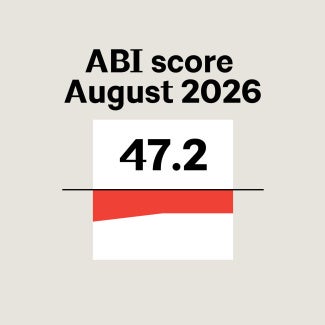
In August, architecture firms continued to face soft business conditions, posting an AIA/Deltek Architecture Billings Index® (ABI) score of 47.2.

