
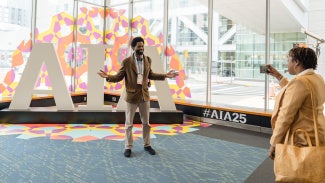
5 Ways to get the most out of an architecture & design conference
Conferences can spark new ideas and strengthen your sense of purpose. Check out these strategies for maximizing your experience at one.
In a profession defined by constant change, architecture and design conferences offer a rare chance to pause and reconnect with the bigger picture. They convene people from disparate disciplines, firms, and points of view for conversations that influence the industry.
Whether you’re drawn to learning new approaches or simply the energy that comes from being around others who care about design as much as you do, these events create space for professionals to think differently. Here are five ways you can make the most of attending one.
Set objectives and put yourself out there
Before you arrive at the conference center, or maybe even before you register, take some time to define what you want out of the experience. Are you hoping to explore new professional avenues? Make more friends in the industry or identify a potential mentor? Learn about committee volunteering and other opportunities to engage? Setting a few clear objectives will help you stay focused and intentional once you’re navigating a hectic schedule while surrounded by thousands of people.
Following through on those intentions can be challenging, though, especially if it’s your first time at a conference or if networking feels like a chore. But you’re there to connect with people, so be brave and put yourself out there. Schedule coffee dates. Attend a keynote with someone you barely know. Sit alone at lunch and invite other solo diners to join you. Use the conference app to connect with professionals who work at firms you admire or who share similar interests.
During every interaction, be curious and ask questions. When you combine clear objectives with a willingness to meet new people, you open the door to unexpected conversations, fresh opportunities, and professional relationships that can shape your career for years to come.
Attend sessions that don’t match your area of expertise
As an architect or design professional, you’ll likely hold a variety of job titles throughout your career. Market swings, design trends, and your goals and interests will all influence how your role evolves over time. By diversifying your knowledge base, you can stay ahead of industry shifts and avoid being pigeonholed into tasks or roles you’ve outgrown.
Attending sessions that fall outside your current role or comfort zone is one of the most valuable ways to expand your perspective at a conference. For instance, if you excel at project management or construction administration, it’s always helpful to deepen those skills, but try mixing in sessions on sustainability, resilience, equity and inclusion, or design innovation. The future of the profession depends on people who understand how all these things intersect.
Engage with new and different project work
One of the biggest advantages of attending a conference is the chance to step outside your firm’s bubble and see how others approach challenges. Conferences offer a wide window into different project types, scales, and strategies you may not encounter in your day-to-day work. Such exposure to new projects and methods will benefit you.
Many conference education sessions include deep dives into project case studies. These are a chance to hear directly from teams who navigated complex constraints, tried new tactics, or pushed boundaries in ways that might spark ideas for your own projects. Even a single insight like a workflow tweak or an innovative material choice can shift your approach.
And don’t underestimate the value of tours. Yes, they will take you away from the conference center for a few hours, but experiencing architecture (and the awe that comes with it) is probably one of the things that drew you to the profession in the first place. Seeing built work up close can recharge your creativity and remind you why design matters.
Don’t sleep on the expo or social events
An expo floor is much more than an endless sea of booths; it’s a concentrated hub of new technology, cutting-edge products, and engaging pop-up events. Exhibiting companies, vendors, and organizations frequently launch new products and initiatives to coincide with major conferences, and you never know what discovery you’ll stumble upon that could improve your projects or processes. Plus, a quick conversation with a manufacturer can unlock information you’d never get from a website or material sample, so don’t be shy to engage.
And even if you don’t think they’re “your thing,” go to the social events. Those are where the real bonding happens. It’s true that their tickets can be pricey, but the same goes for dinner out or room service. Social events give you a relaxed environment to reconnect with old friends, meet new ones, and build the kind of relationships that make conferences memorable.
See the experience as an investment in your career and your firm
Conferences require time, money, and energy, but the return on that investment is significant. You’ll come back home (and back to work) with new knowledge, fresh ideas, and a clearer sense of where the industry is heading and how you can contribute to its positive evolution.
But the impact doesn’t stop with you. When you approach a conference experience with intention, you’re also gathering insights to share with your colleagues, whether through a lunch‑and‑learn, informal mentoring, or simply bringing new thinking into project meetings. That’s why attending a conference and meaningfully engaging can inspire progress for both yourself and your firm, all while keeping you connected to the broader industry.
If you’re ready to connect with leaders and peers and explore new ideas in architecture, ask your chapter if it has an annual conference, attend one of the many conferences produced by AIA Knowledge Communities, or register for the AIA Conference on Architecture & Design 2026 (June 10-13 in San Diego)!
Kathleen M. O'Donnell is a freelance writer, editor, and communications strategist based in Washington, D.C. She is committed to telling stories that provide useful insights to architects and designers and highlight the impact of their work.