ABI July 2026: Architecture firm billings remain weak
Nearly one-third of firms have completed, or actively considered, a merger/acquisition in the last year.

Architecture firm billings remain weak in July
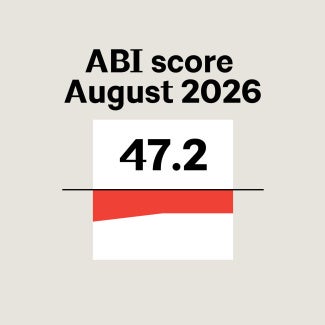
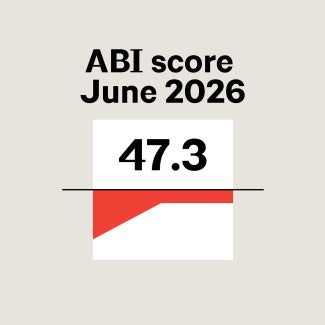
The AIA/Deltek Architecture Billings Index® (ABI) score for the month was 46.6, indicating somewhat further softening from June. The persistent downturn in business conditions now extends to nearly three and a half years, as many firms continue to struggle to grow their billings. Clients are still bringing business to firms, as inquiries into new projects rose again in July, although at a slower pace than in June. However, the value of newly signed design contracts declined further after nearly approaching growth last month.
Business conditions also remained weak at firms in all regions of the country in July. Firms located in the Northeast reported the softest conditions for the second consecutive month, while the pace of the ongoing decline slowed slightly at firms in the other three regions. Billings declined at firms of all specializations as well. While firms with multifamily residential and institutional specializations both saw slight growth earlier this year, conditions have softened since then. Firms with a commercial/industrial specialization, on the other hand, have not reported an increase in billings since four years ago this month.
Broader economy remains uneven as inflation pressures persist
Conditions remained relatively mixed in the broader economy in July. Nonfarm payroll employment decreased for the second time this year, shedding 23,000 jobs in July. Construction employment remained generally flat, while architecture services employment declined by 100 positions in June (the most current data available). June marked the fourth consecutive month of declines in employment in the industry, which has lost a total of 900 jobs so far since January.
Inflation remains high, as the Consumer Price Index (CPI) increased by 0.1% from June to July, after declining by 0.4% from May to June. Shelter and food (particularly away from home) were the primary contributors to the increase this month, although energy prices declined by 1.5%. In better news, consumers were somewhat more optimistic, with the University of Michigan’s Index of Consumer Sentiment rising by 11.5% in July. However, the overall index remains down by 10.5% from one year ago, as purchasing power/inflation remains a key issue for consumers.
Architecture firms weigh mergers and acquisitions as a strategy for growth and long-term stability
This month’s special questions asked firms about merger and acquisition activity in the architecture industry. Overall, 30% of responding firm leaders reported that they have either gone through with a merger or acquisition or actively considered one over the last year. Large firms with annual billings of $5 million or more (43%), firms located in the South (39%), and firms with a commercial/industrial specialization (35%) were the most likely to report having gone through with, or actively considered, a merger or acquisition. Of the different types of merger and acquisition activities, 10% of firms indicated that they actively considered being acquired by another firm, 8% that they actively considered acquiring another firm, 8% that they actively considered merging with another firm, and 4% that they went through a merger with or acquired another firm. In addition, 29% of firms indicated that they completed or considered an internal ownership transition over the last year. However, slightly more than half of firms overall (54%) reported that they have not engaged in any merger, acquisition, or ownership transition activity over the past year.
At the firms that have participated in, or considered, a merger or acquisition over the past year, 54% rated these two factors as very important in their decision: allowing the firm to compete more effectively, and that it was the best way to ensure the survival of the firm. An additional 53% rated the ability to add new markets/serve a broader area/develop an international presence, and allows for greater diversity of projects to hedge against economic cycles/construction cycles as very important factors, while 52% selected the ability to be more competitive for large projects, and 50% selected allowed owners to sell firm/realize benefits from investment as very important factors.
Overall, more than half of responding firms (59%) think that it is unlikely that their firm will be acquired by or merge with another firm over the next 3–5 years. However, nearly one quarter (23%) think that it is likely, while the remaining 18% think that it is neither likely nor unlikely. And just 14% of responding firms think that it is likely that their firm will acquire another firm over the next 3–5 years, while 69% think that it is unlikely, and 18% think that it is neither likely nor unlikely. However, large firms and firms with an institutional specialization were much more likely to project an acquisition by their firm, with 24% and 22%, respectively, rating it as likely.
As far as overall merger and acquisition trends in the industry, 65% of responding firm leaders believe that merger and acquisition activity among U.S. architecture firms is likely to increase over the coming 3–5 years, with just 2% expecting that it will decrease, and 15% anticipating that it will remain at current levels (the remaining 18% indicated that they don’t know how this activity will trend). Finally, nearly half of firms (41%) indicated that they believe that architecture firm acquisitions of/mergers with other architecture firms will be the one most common type of merger and acquisition activity that may occur over the coming 3–5 years. However, 15% think that private equity acquisitions of architecture firms will be the most common type, while 12% expect it to be architecture firm acquisitions of/mergers with other nonarchitecture firms (e.g., interior design, planning, engineering, construction), and 10% expect it to be nonarchitecture firm acquisitions of/mergers with architecture firms (the remaining 20% said that they don’t know which type of activity will be most common).
- Join us for FREE at the next AIAU live webinar, Economic Update: Q4 2026 ABI Insights, on October 21, 2026, at 2pm ET.
-
 AIAThe AIA/Deltek Architecture Billings Index® (ABI) is a diffusion index derived from the monthly Work-on-the-Boards survey, conducted by the AIA Economics & Market Research Group. The ABI serves as a leading economic indicator that leads nonresidential construction activity by approximately 9-12 months. The survey panel asks participants whether their billings increased, decreased, or stayed the same in the month that just ended. According to the proportion of respondents choosing each option, a score is generated, which represents an index value for each month. An index score of 50 represents no change in firm billings from the previous month, a score above 50 indicates an increase in firm billings from the previous month, and a score below 50 indicates a decline in firm billings from the previous month.
 -
 AIAGraphs represent data from July 2025–July 2026.
 -
 AIAGraphs represent data from July 2025–July 2026 across the four regions. 50 represents the diffusion center. A score of 50 equals no change from the previous month. Above 50 shows increase; Below 50 shows decrease. 3-month moving average.
 -
 AIAGraphs represent data from July 2025–July 2026 across the three sectors. 50 represents the diffusion center. A score of 50 equals no change from the previous month. Above 50 shows increase; Below 50 shows decrease. 3-month moving average.
 -
 AIAPercentage of firms, activities they have undertaken over the last year, multiple responses permitted.


This month, Work-on-the-Boards participants are saying:
- “We are having a slow couple of months with a huge uptick anticipated in the fall when several large projects will start.”—220-person firm in the Midwest, institutional specialization
- “Business conditions are tepid, but outlook for new work is good.”—75-person firm in the South, commercial/industrial specialization
- “We recently had 10 bidders for a small renovation project on a challenging site. I don’t recall work of all scales and of every type stopping this abruptly in almost 40 years.”—1-person firm in the West, mixed specialization
- “Projects are plentiful, just small.”—17-person firm in the Northeast, institutional specialization
Join the ABI Work-on-the-Boards panel to participate in our monthly survey. Open to architecture firm owners, principals, and partners. All participants get a free ABI subscription.
The monthly AIA/Deltek Architecture Billings Index is a leading economic indicator for nonresidential construction activity.
Deltek is the home of AIA MasterSpec®, powered by Deltek Specpoint. Deltek helps A&E firms boost efficiencies while improving collaboration and accuracy.