ABI September 2026: Architecture firm billings slump deepens
Firm revenue is down by an average of 3% from 2025, expected to remain flat in 2027.

Business conditions softened further at architecture firms in September
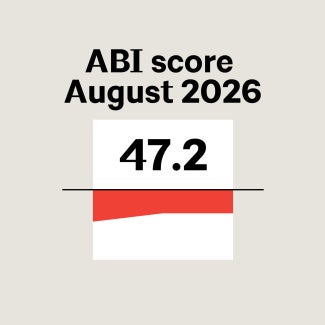
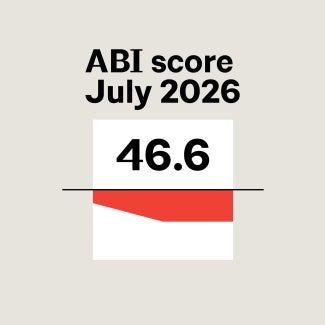
The AIA/Deltek Architecture Billings Index® (ABI) score of 44.7 for the month shows further weakening from August, and the greatest share of firms reporting declining billings since May. While inquiries into new projects increased modestly, the value of newly signed design contracts declined further, after approaching growth over the summer. And while firm backlogs averaged a relatively strong 6.2 months at the end of the third quarter, they have fallen from 6.6 at the end of the first quarter. The most noticeable decline in backlogs was at firms with a multifamily residential specialization, where backlogs have fallen from 6.2 months at the end of March to 4.8 months at the end of September. Backlogs remained steady at 8.1 months at large firms with annual billings of $5 million or more and 8.0 months at firms with an institutional specialization and increased from 3.1 months to 3.8 months at small firms with annual billings of less than $250,000. While backlogs have declined across the board from their post-pandemic peaks, most firms still have a decent amount of work in the pipeline at this time.
Business conditions were very mixed across the country in September. While billings remained very soft at firms located in the Northeast and continued to weaken from earlier in the year at firms located in the South, they improved at firms in other areas, with firms located in the West and Midwest both reporting flat billings. In addition, firms with a commercial/industrial specialization also saw slight growth in billings for the second consecutive month in September. However, billings declined for the sixth consecutive month at firms with an institutional specialization and for the fifth consecutive month at firms with a multifamily residential specialization, where conditions have weakened significantly since showing promise at the beginning of the year.
Broader economic conditions show mixed signals
Overall conditions in the broader economy also softened somewhat in September. Nonfarm payroll employment added 29,000 new jobs, below the 40,000-50,000 new jobs needed each month to keep conditions stable. However, average monthly gains over the last 12 months have been solidly within that range at 45,000, so while this month’s growth is less than expected, it is not yet cause for concern. Architectural services employment added 300 new positions in August (this data lags national data by one month) to reach a total of 204,500 employed in the industry. This level has generally been consistent over the last year.
And inflation ticked back up in September after some improvement in August, rising by 0.6%, after growing by 0.4% from July to August. This represents an increase of 3.7% in consumer prices from one year ago, the highest annual increase since May, when it was 4.2%. Gasoline and energy prices remain the greatest contributors to the increase, with gasoline up by 9.1% from August and energy prices up by 5.2%.
Firm leaders report lower revenue and cautious expectations for 2027
This month we asked architecture firm leaders about how their firm’s revenue has performed this year and what their expectations are for 2027. Overall, nearly half of responding firm leaders (45%) indicated that their current estimate for net revenue at their firm this year is down in comparison to 2025, by an average of 2.9%. However, 30% indicated that their revenue is up this year (with 13% reporting that it is up by 10% or more), while the remaining 25% indicated that this year’s revenue is about on par with 2025. Small firms with annual billings of less than $250,000 reported the greatest decline, 7.2%, followed by firms located in the Northeast, 5.7%. The smallest declines were large firms with annual billings of $5 million or more (0.0%) and firms located in the Midwest (0.7%).
Overall, responding firm leaders were more likely to report that their current estimates for 2026 net revenue are less than they were at the beginning of the year (47%, with 20% saying that they are significantly less than expected), with 33% indicating that they are in line with those expectations, and just 21% saying that they are more than those initial estimates. Firms with a multifamily residential specialization were most likely to report that current estimates are less than expected (57%), while small firms are most likely to report that they are more than expected (29%).
When looking ahead to 2027, firm leaders are about evenly split between those expecting that net revenue growth will decrease (32%), stay about the same as 2026 (36%), and those expecting that revenue will increase (32%). Overall, they expect net revenue to decline by an average of 0.9% in 2027 from 2026, although that is significantly higher for small firms, where they expect a decline of 9.1%. Firms located in the Northeast and those with a multifamily residential specialization, which are already having challenges, each expect revenue to decline by an average of 3.5% in 2027.
At firms expecting a decrease in revenue in 2027, the reasons most frequently cited as major factors were current projects winding down and fewer new ones on the horizon (selected as a major factor by 70%), uncertain economic conditions discouraging potential clients from pursuing projects (56%), fewer opportunities/less work available in the pipeline (55%), and construction market fundamentals are too negative (e.g., construction costs remain high, vacancy rates are elevated, demand is weak, financing remains restrictive) (54%). At firms expecting an increase in revenue in 2027, the most commonly cited reason was larger project(s) proceeding, which 46% indicated as a major factor. Improving construction financing market, being more fully staffed and able to increase billings, and increased efficiency due to AI were cited as not being factors contributing to increased revenue by nearly two-thirds of responding firm leaders.
- Join us for FREE at the next AIAU live webinar, Economic Update: Q4 2026 ABI Insights, on October 21, 2026, at 2 pm ET.
-
 AIAThe AIA/Deltek Architecture Billings Index® (ABI) is a diffusion index derived from the monthly Work-on-the-Boards survey, conducted by the AIA Economics & Market Research Group. The ABI serves as a leading economic indicator that leads nonresidential construction activity by approximately 9-12 months. The survey panel asks participants whether their billings increased, decreased, or stayed the same in the month that just ended. According to the proportion of respondents choosing each option, a score is generated, which represents an index value for each month. An index score of 50 represents no change in firm billings from the previous month, a score above 50 indicates an increase in firm billings from the previous month, and a score below 50 indicates a decline in firm billings from the previous month.
-
 AIAGraphs represent data from September 2025–September 2026.
-
 AIAGraphs represent data from September 2025–September 2026 across the four regions. 50 represents the diffusion center. A score of 50 equals no change from the previous month. Above 50 shows an increase; Below 50 shows a decrease. 3-month moving average.
-
 AIAGraphs represent data from September 2025–September across the three sectors. 50 represents the diffusion center. A score of 50 equals no change from the previous month. Above 50 shows an increase; Below 50 shows a decrease. 3-month moving average.
-
 AIAPercentage of firms, current estimate for net revenue change for 2026 as compared to 2025, and projected change for 2027 compared to 2026


This month, Work-on-the-Boards participants are saying:
- “There are opportunities out there, but there is increased competition, and projects we had counted on to start have been delayed.”—60-person firm in the Midwest, institutional specialization
- “There is an increasingly narrow window to make any project financially viable. A couple of large projects are keeping going, but it could very easily turn.”—39-person firm in the South, multifamily residential specialization
- “Current work is carrying us, but new work looks scarce.”—1-person firm in the Northeast, commercial/industrial specialization
- “Much more competitive environment than in 2021–2024.”—11-person firm in the West, mixed specialization
Join the ABI Work-on-the-Boards panel to participate in our monthly survey. Open to architecture firm owners, principals, and partners. All participants get a free ABI subscription.
The monthly AIA/Deltek Architecture Billings Index is a leading economic indicator for nonresidential construction activity.
Deltek is the home of AIA MasterSpec®, powered by Deltek Specpoint. Deltek helps A&E firms boost efficiencies while improving collaboration and accuracy.