AIA publishes guide to advance regenerative design
AIA's report, Creating a Better World Together: Financing and Building Regenerative Design, provides a roadmap for funding and delivering regenerative projects.
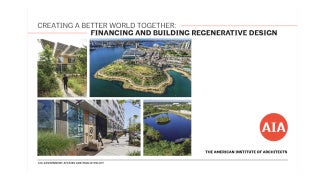
WASHINGTON – October 14, 2026 – The American Institute of Architects (AIA) has released Creating a Better World Together: Financing and Building Regenerative Design, a practical guide to help architects and policymakers advance regenerative projects from concept to completion.
Released at the Regenerative Design Summit at the AIA Global Campus, the report explores the financing and policy tools needed to deliver regenerative projects, showcases six case studies across varied geographic and cultural contexts, and outlines actions to accelerate adoption of regenerative design.
AIA defines regenerative design as the holistic approach to enhancing and restoring buildings, communities, and nature, which integrates buildings within their natural and social environments to actively restore ecosystems, strengthen communities, and create a net-positive environmental impact. Regenerative design offers a path forward. By striving to address these complex, interrelated challenges holistically, and moving from simply reducing harm to active repair and restoration, regenerative design shines a light on ancient wisdom.
“Regenerative design is the difference between curing symptoms and healing entire cities,” said 2026 AIA President Illya Azaroff, FAIA. “A regenerative future is one where natural and human systems work together rather than compete, where a building contributes more than it consumes, and where communities are stronger because of the investments we make today.”
The report identifies five interconnected pillars that underpin the practice of regenerative design:
- Whole Systems Thinking: Planet, ecosystems, and communities are interconnected.
- Optimize Carrying Capacity: Aligning decisions with a place’s ecological limits and opportunities.
- Spirit of Place: Design emerges from ecological and cultural context.
- Active Renewal: Design restores water cycles, enriches biodiversity, and generates more energy than consumed.
- Design Evolution: Design for adaptability so performance improves over time.
The report features six case studies spanning diverse project types, climates, geographies, and policy environments. Together, they demonstrate how architects have applied AIA’s Five Pillars of Regenerative Design while leveraging innovative financing and funding strategies to bring projects to life. In some cases, funding mechanisms shaped project outcomes; in others, regenerative design approaches unlocked new investment opportunities. Across all examples, architects expanded their role beyond traditional design services, helping convene stakeholders, restore ecosystems, strengthen communities, and create lasting value for clients and the places they serve.
Access the report: Creating a Better World Together: Financing and Building Regenerative Design.
Complete our form to submit a press inquiry or speaking request.
Follow AIA on LinkedIn.

In recognition of the International Day for Disaster Risk Reduction, AIA is announcing support for three congressional proposals to help communities prepare for, withstand, and recover from disasters