Neighborhood Net-Zero
Design problem
As artificial intelligence (AI) technology expands, the need for data centers is growing rapidly. While this growth fuels innovation, it also raises serious environmental and community concerns. Most AI data centers use massive amounts of electricity and water, often straining local resources. Design a net-zero data center that significantly reduces its environmental impact/carbon footprint and respects the surrounding community. Successful proposals will demonstrate creative solutions to conserve energy and water, reuse or recycle resources, and/or integrate renewable energy sources, and at the same time, consider carefully how the building will affect local communities in terms of resource usage and pollution, minimizing noise and vibration, to aesthetically fit into the local environment in a thoughtful way, and/or address other potential issues. You may choose to create an entirely new structure or reimagine an existing one, but your solution should balance the needs of technology, sustainability, and community.
Student solution
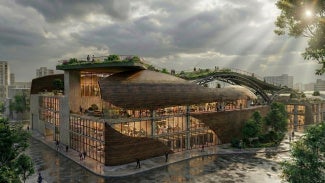
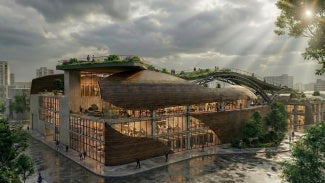
We began with brainstorming and researching what makes a data center net-zero by studying sustainable strategies used in other facilities to reduce carbon emissions. We also looked for an existing data center that could be redesigned in order to reduce waste and recycle existing infrastructure. Our team ultimately selected the SFO10 Data Center in San Francisco because it is located near residential neighborhoods. Our net-zero data center that incorporates green roofs and living walls, fog-catching systems, and public access can function as regenerative civic infrastructure rather than isolated technical architecture. By producing renewable energy and redistributing surplus power to a nearby school and public park, the building actively supports local energy resilience and social equity. Green roofs and vertical vegetation reduce heat-island effects, improve air quality, enhance insulation, and create habitats for urban biodiversity. It is the perfect location for local community events.
-
 Ace Mentor San Diego